
The Crone Hypothesis
Thoughts on the Alchemy of Memory

I am, and have always been, a word nerd and a bionerd. No surprise that over the course of my life I have been transfixed by a sequence of theories about science.
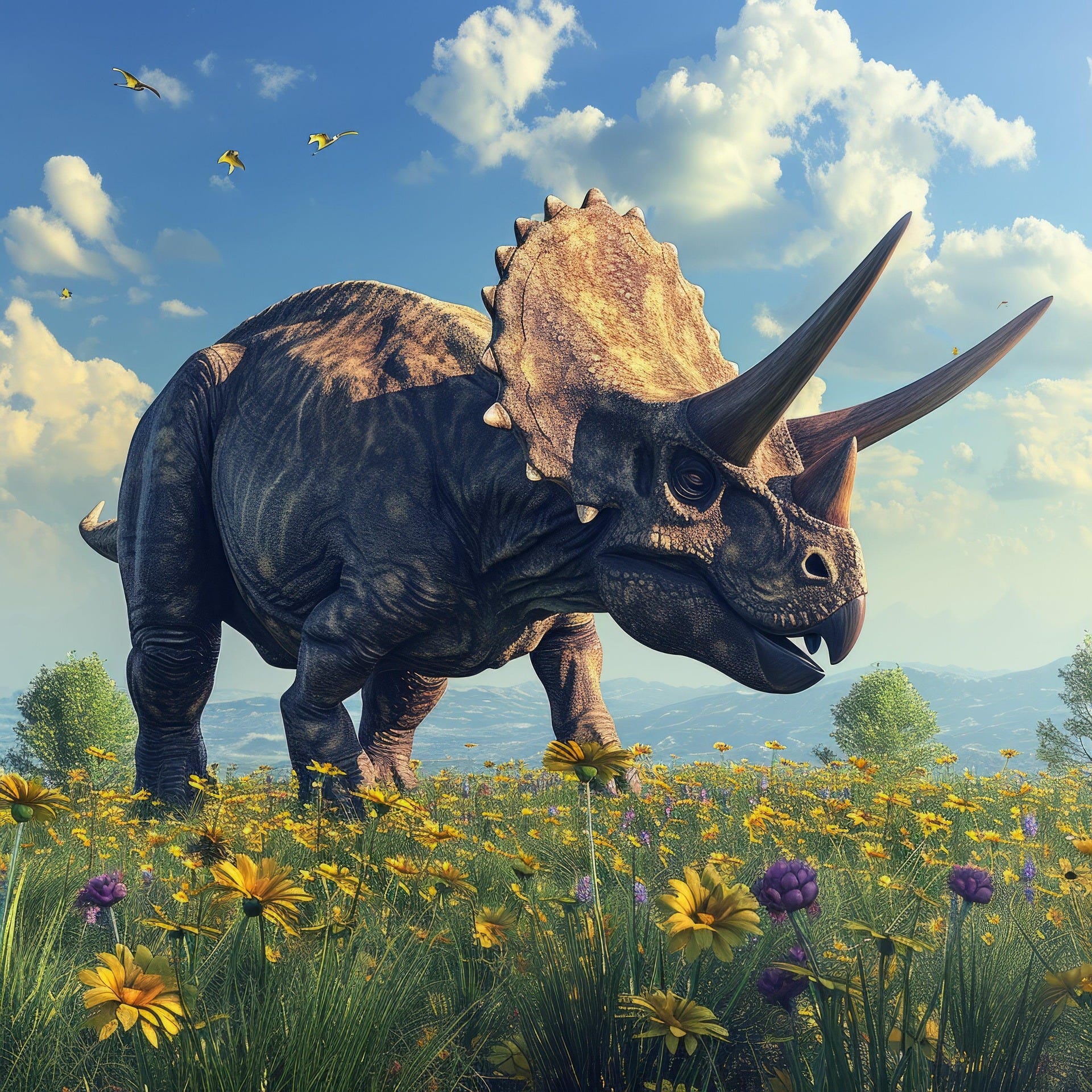
The first was not a theory but a myth. As a child I believed that my collection of plastic dinosaurs, themselves an accretion of dinosaur remains, represented a pantheon of dino gods, from the vengeful T. rex to the smart and beneficent Triceratops.
Then as a young woman I was captivated by the idea that our remote ancestors, tubelike ocean dwellers continually bathed in the bounty of the sea, carried the ocean into our veins when our circulation closed, which is why our blood today has the exact salinity of those antique oceans (This Sea Within, indeed).
In midlife I was entranced to learn that the genes we think of as “bad” are also protective; that every story has both a happy and an unhappy ending. The mutation for sickle cell is more common among people whose ancestors lived near mosquito-filled lakes, and whereas two genes are deadly, one gene protects from malaria. And the mutation for Tay-Sachs is more common among people forced to live in close proximity. Two of those genes are deadly, but one protects against tuberculosis.
As an old woman I read that every time we take out a memory and reexamine it, we re-store it slightly differently than before. Some interpret this as the unreliability of memory; that our later perspectives are somehow unworthy. But this last myth, this idea that we cannot trust our most precious memories, the ones we ponder like waves revisiting a favorite stone, this myth itself needs revising.
What if we said instead that the reinterpretation of memory is the biological basis of perspective and the fount of wisdom? And what if, even beyond that, our ability to refashion and redefine memory is itself the stuff of creativity: The redemption of our mistakes, the redress of our powerlessness.
We know that all fiction is autofiction: We cannot help but write what we know, but we can rewrite what we know.
The revenge novel is a primitive example. A cheating lover can meet an ironic death, as mine did in Brilliant Charming Bastard.
We can bring back the dead child and center him brilliantly onstage, as Maggie O’Farrell did with her son and Shakespeare’s in Hamnet.
We can give ourselves magic to match our wisdom, as Lydia Hawke does in her CroneWars novels.
We can use that very power of imagination, the power of old women, to transmute the wood of our long experience into the gold of wisdom. Seen in this light, we can view old age itself as a form of magic, a time not just of growth but of alchemy: a personal Renaissance.
One last scientific myth (or theory, if you please). Why we live so long past our reproductive years was a mystery until the anthropologist Kristen Hawkes observed hunter-gatherers in Tanzania. She realized that the older women spent their time collecting food for their grandchildren, freeing up the mothers to have more children. Hawkes hypothesized that the longest-lived grandmothers had the most grandchildren, creating evolutionary pressure for longevity well past menopause in women (as opposed to other apes, where the female lifespan ends with her childbearing years). Hawkes suggested that as humans developed more complex cultures, grandmothers continued to ensure that children were fully taken care of.
Now let’s expand that hypothesis beyond biological grandmothers to all older women. We do not persevere in this life only to give sustenance to our grandchildren, as marvelous as that is. We are here to share what is possible with the world, through every form of creation and storytelling. We Crones are here to alchemize our memories.
Or you can buy me a cup of tea. That’s lovely too.
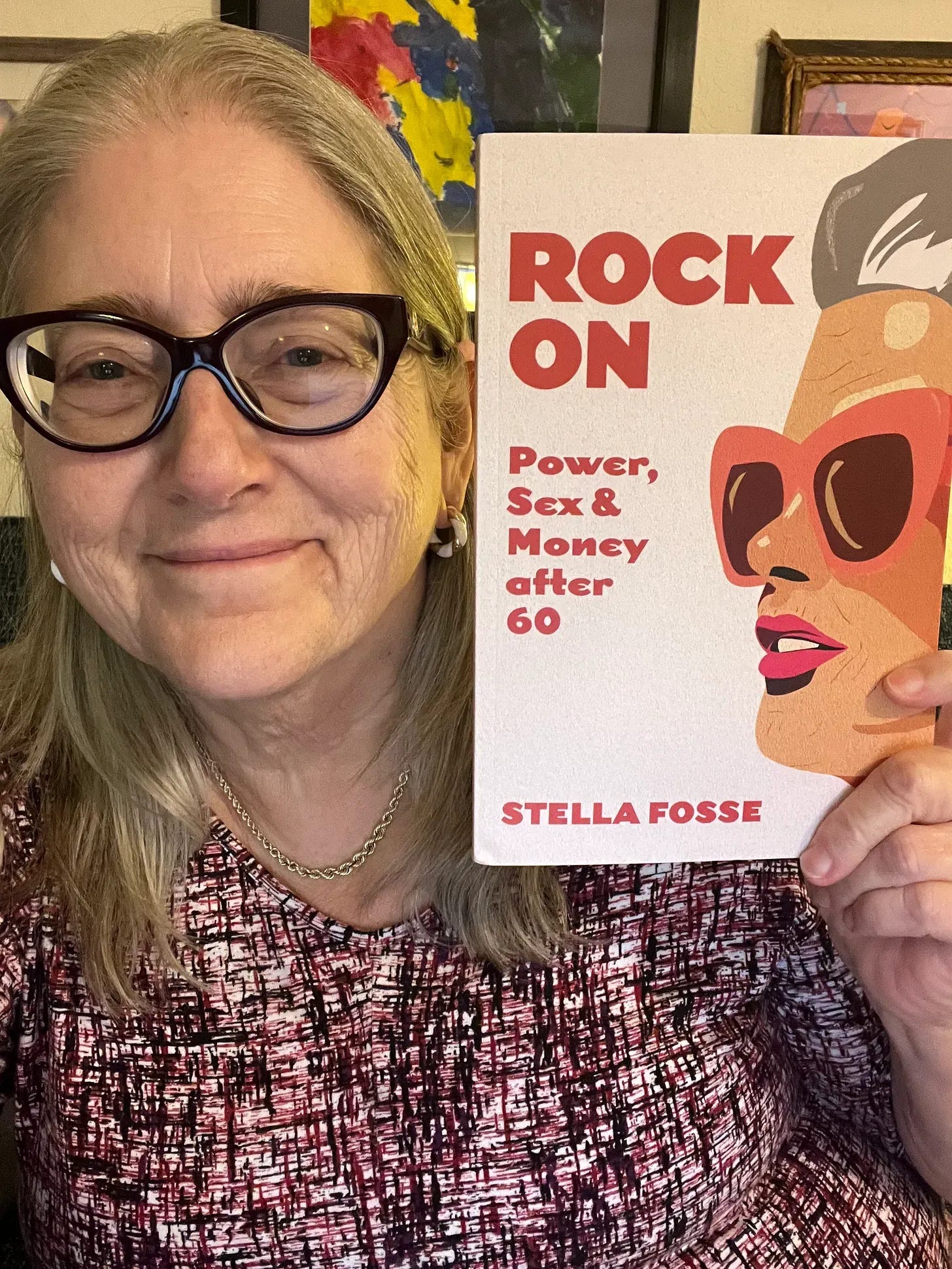
For more reflections on later life, check out my 2025 book, Rock On: Power, Sex and Money after 60. On order from your local bookstore or at all the online places. Better yet: Buy the e-book direct from Stella, here.
I’m sitting with an 87 yo patient who is doing a writing exercise so I had time to read this and just sent it to her
I love this way of thinking about genes, age and memory. Thank you.